Point of Use Reverse Osmosis Systems
Get pure, great-tasting drinking water with the Hellenbrand Millennium Pro, our #1 recommended RO system. Removes up to 99.9% of contaminants and installs in your basement, utility room, or under the sink.
See Our SystemsWhat is Reverse Osmosis?
Reverse osmosis (RO) is a water purification process that uses a semi-permeable membrane to remove contaminants from your drinking water. It's one of the most effective filtration methods available.
What RO Removes:
- Lead and heavy metals
- Chlorine and chloramines
- Fluoride
- Bacteria and viruses
- Pesticides and herbicides
- Dissolved solids (TDS)
- Bad tastes and odors

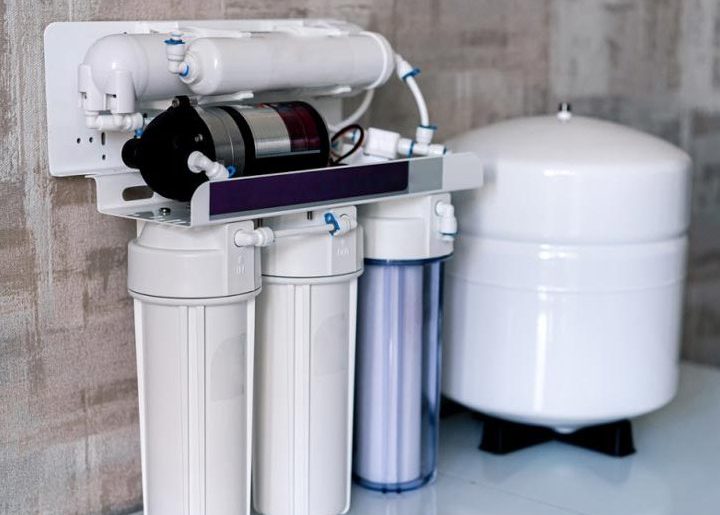
Benefits of Point-of-Use RO
- Crystal clear, great-tasting water
- Better tasting coffee, tea, and ice
- Healthier cooking water
- Flexible installation, under sink, basement, utility room, or anywhere with a water line
- No loss of cupboard space, install in the basement or utility room and keep your under-sink storage
- Dedicated faucet for purified water
- Low maintenance, filter changes 1-2x per year
- More economical than bottled water
Our Recommended Reverse Osmosis Systems
As a factory authorized Hellenbrand dealer, we carry the most advanced point-of-use RO systems available. Each one is built to deliver exceptional water purity, reliability, and long-term value for your family.
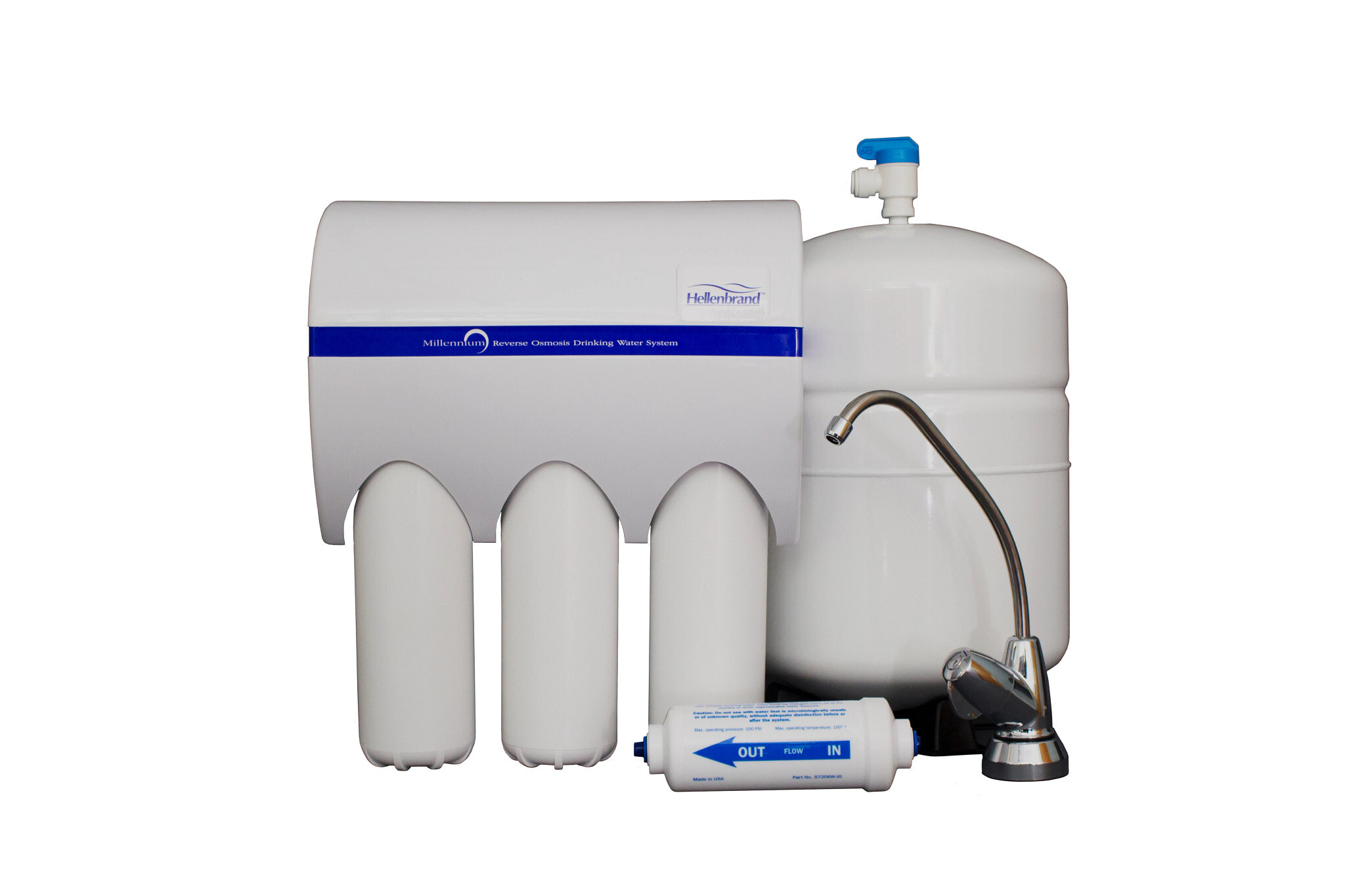 Our #1 Recommendation
Hellenbrand Millennium Pro RO, Our Top-Selling System
The Millennium Pro is the RO system we recommend for most Northern Minnesota homes, and it's the one our customers reorder most. It uses a high-performance TFC membrane paired with multi-stage pre- and post-filtration to deliver water that's up to 99% free of dissolved contaminants, including lead, fluoride, arsenic, nitrates, and chlorine. The result is crisp, refreshing drinking water that makes your coffee, tea, and ice taste noticeably better.
Unlike big-box store RO units, the Millennium Pro is engineered for professional installation and long-term reliability. Quick-change filter cartridges make annual maintenance fast and mess-free. It installs compactly in your basement, utility room, under the kitchen sink, or wherever your plumbing allows, not just under the sink. In fact, most of our installers prefer placing the unit in the basement or utility room, which keeps your under-sink cupboard space completely free.
- Multi-stage filtration with sediment, carbon, and TFC membrane
- Removes up to 99% of dissolved contaminants
- Quick-change filter design for easy maintenance
- Flexible installation, basement, utility room, under sink, or anywhere with a water line
- Includes dedicated chrome faucet
- Designed and manufactured in the USA
Hellenbrand Millennium Pro+ RO
The Millennium Pro+ is the standard Pro with one addition: a permeate pump. Hellenbrand's brochure says the permeate pump forces product water into the storage tank, reduces membrane back pressure, and cuts wastewater by up to 80 percent. Like the standard Pro, it can be installed in your basement, utility room, or under the sink.
- Permeate pump added to the Millennium Pro design
- Reduces wastewater by up to 80 percent, per Hellenbrand
- Flexible installation, not limited to under-sink
Where Can an RO System Be Installed?
Many people assume an RO system only fits under the kitchen sink, but that's not the case. Our Hellenbrand Millennium Pro and Pro+ systems can be installed in a variety of locations throughout your home, wherever there's access to a cold water line and a drain:
- Under the kitchen sink (most common)
- In the basement near your water treatment equipment
- In a utility room or mechanical room
- In a crawl space with proper access
- A dedicated water line runs to your kitchen faucet from the unit
Why the Millennium Pro Is Our #1 Recommendation
After more than 50 years of installing and servicing water treatment equipment across Northern Minnesota, we've tested just about every brand on the market. The Hellenbrand Millennium Pro consistently outperforms the competition in three key areas: water quality, reliability, and ease of maintenance. It's the system we install most and the one our customers are happiest with.
Hellenbrand systems are designed and manufactured in the USA, backed by strong warranties, and built with quick-change filter cartridges that make annual maintenance fast and mess-free. Unlike big-box store RO units that use generic components, the Millennium Pro is engineered for professional installation and long-term performance. And because it can be installed in your basement, utility room, or under the kitchen sink, it fits virtually any home layout.
Whether you choose the Millennium Pro for everyday drinking water or the Pro+ for enhanced filtration, you're getting a system that our technicians trust and stand behind.

Product Resources & Manuals
Download brochures, owner's manuals, and technical documents for our reverse osmosis systems.
Frequently Asked Questions
What does an under-sink reverse osmosis system remove from drinking water in Northern Minnesota homes?
An under-sink reverse osmosis system removes dissolved contaminants a water softener does not address, including lead, arsenic, nitrates, fluoride, chlorine, and total dissolved solids (TDS). Water is forced through a semi-permeable membrane plus carbon stages, producing crisp, purified water for drinking, cooking, coffee, and ice.
Do I still need a reverse osmosis system if I already have a water softener?
Yes, because a softener and a reverse osmosis system do different jobs. A softener removes hardness minerals to protect plumbing and appliances throughout the home, while a point-of-use RO unit polishes water at one tap, removing dissolved contaminants like lead and nitrates. Together they deliver soft water everywhere and purified drinking water at the kitchen.
Where can a point-of-use reverse osmosis system be installed in my home?
A point-of-use reverse osmosis system can be installed under the kitchen sink, in a basement, or in a utility or mechanical room, anywhere with a cold water line and a drain. A dedicated line then carries purified water to a separate faucet at the kitchen sink, freeing up under-sink cupboard space.
How often do reverse osmosis filters need to be changed?
Reverse osmosis filters typically need changing about once or twice per year, depending on your water quality and usage. The carbon and sediment cartridges are the routine replacements, while the RO membrane itself lasts longer and is replaced only periodically. Range Water can handle this simple annual maintenance for Northern Minnesota homes.
Does a reverse osmosis system make water taste better for coffee and cooking in Northern Minnesota homes?
Yes, reverse osmosis noticeably improves taste by removing chlorine, dissolved solids, and other contaminants that affect flavor and odor. Many Northern Minnesota homes notice better-tasting coffee, tea, ice, and cooking water after installing a point-of-use RO system, since the membrane delivers consistently clean, crisp water at the tap.
Is a reverse osmosis system worth it compared to buying bottled water?
A point-of-use reverse osmosis system is generally more economical than ongoing bottled water purchases and produces fresh purified water on demand from a dedicated faucet. It eliminates plastic waste and trips to the store, and routine maintenance is limited to filter changes about once or twice per year.
Does a reverse osmosis system waste water?
Yes. Some water goes to the drain, and Hellenbrand publishes figures for the Millennium Pro. Its manual lists drain flow at 3 to 5 times product flow, and an efficiency rating of 26 percent, meaning the share of incoming water that reaches you as treated water in typical daily use. The manual says these figures are for comparison only. An automatic shutoff valve closes the feed water once the storage tank is full.
Do I need an iron filter or a water softener before a reverse osmosis system?
Often, yes. Hellenbrand's recommended feed water limits for the Millennium Pro are iron under 0.1 ppm, manganese under 0.05 ppm, no hydrogen sulfide, and hardness under 10 grains per gallon or softened. The manual also says softened water is preferred because it extends the life of the membrane. Our free in-home test reads hardness, iron, manganese, pH, TDS and chlorine on the spot, and a rotten egg smell points to hydrogen sulfide, so mention it when you book.
Does reverse osmosis remove bacteria from well water?
The Minnesota Department of Health lists bacteria and viruses among what reverse osmosis is designed to fully or partially remove. Even so, the Millennium Pro manual warns in capitals against using the system on water that is microbiologically unsafe or of unknown quality without adequate disinfection before or after it. MDH recommends testing a well for coliform bacteria every year. If a test is positive, MDH says to use boiled or bottled water until the issue is addressed, disinfect the well, and test again.
What is the difference between the Hellenbrand Millennium Pro and the Millennium Pro+?
The Pro+ adds a permeate pump. Otherwise Hellenbrand's two brochures describe the same stages: a sediment and carbon block pre-filter rated to 5 microns, the membrane, the storage tank, and a carbon post-filter, with the same 6 to 12 month filter interval. The brochure says the permeate pump forces product water into the storage tank, reduces membrane back pressure, and cuts wastewater by up to 80 percent.
Do I have to drill a hole in my countertop for the reverse osmosis faucet?
Not necessarily. The Millennium Pro manual's standard install puts a dispensing faucet through the sink or countertop, and says the easiest route is an existing sprayer hole. That faucet also carries the anti-siphon air gap the manual requires for the drain line. The Titan Water Selector, the kitchen faucet guide above, connects to your existing faucet instead, and Hellenbrand notes the filtered stream runs about half the force of the tap stream. We confirm the drain arrangement on site.
Drinking Water Systems Across Northern Minnesota
An under-sink reverse osmosis system works the same on Duluth city supply as it does on a Range well. Choose your area for local water details.
Crow Wing County
- Brainerd
- Pequot Lakes
- Baxter
- Crosby
- Nisswa
St. Louis County
- Duluth
- Hermantown
- Hibbing
- Biwabik
- Virginia
- Eveleth
Itasca County
- Grand Rapids
- Hill City
- Deer River
- Cohasset
- Bigfork
Beltrami County
- Bemidji
- Blackduck
- Kelliher
Carlton County
- Cloquet
- Carlton
- Moose Lake
Koochiching County
- International Falls
- Littlefork
- Northome
North Shore
- Two Harbors
- Silver Bay
- Schroeder
- Tofte
Ready for Pure Drinking Water?
Schedule a free water test and see what's really in your water.
Get Your FREE QuoteGet In Touch
Have questions about your water quality or our services? We're here to help!
Grand Rapids: +1 218-322-0575
Duluth / Hermantown: +1 833-659-5553
Pequot Lakes: +1 218-322-1793
Northern Minnesota
Grand Rapids, Duluth, Brainerd & Beyond
Monday - Thursday: 9:00 AM - 5:00 PM
Friday: 9:00 AM - 4:00 PM
Factory Authorized Dealer:
